
Anthropic CEO stands firm as Pentagon deadline looms
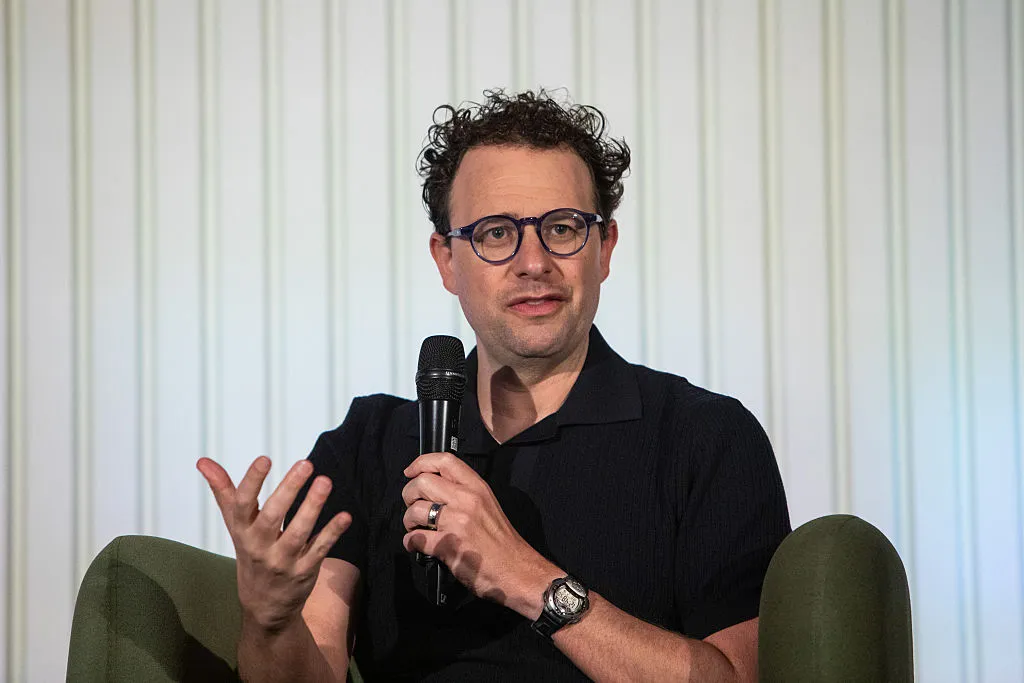
Anthropic CEO Dario Amodei said Thursday that he "cannot in good conscience accede" to the Pentagon's demands to give the military unrestricted access to its AI systems.
Anthropic CEO Dario Amodei said Thursday that he “cannot in good conscience accede to [the Pentagon’s] request” to give the military unrestricted access to its AI systems.
“Anthropic understands that the Department of War, not private companies, makes military decisions,” Amodei wrote in a statement. “However, in a narrow set of cases, we believe AI can undermine, rather than defend, democratic values. Some uses are also simply outside the bounds of what today’s technology can safely and reliably do.”
The two cases are: mass surveillance of Americans and fully autonomous weapons with no human in the loop. The Pentagon believes it should be able to use Anthropic’s model for all lawful purposes, and that its uses shouldn’t be dictated by a private company.
Amodei’s statement comes less than 24 hours ahead of the Friday 5:01 p.m. deadline Defense Secretary Pete Hegseth has given Anthropic to either acquiesce to his demands, or face the consequences. An Anthropic spokesperson told TechCrunch Amodei’s statement does not mean the firm is walking away from negotiations and is continuing to engage in good faith with the Department going forward.
“The contract language we received overnight from the Department of War made virtually no progress on preventing Claude’s use for mass surveillance of Americans or in fully autonomous weapons,” an Anthropic spokesperson told TechCrunch. “New language framed as compromise was paired with legalese that would allow those safeguards to be disregarded at will. Despite DOW’s recent public statements, these narrow safeguards have been the crux of our negotiations for months.”
The Department of Defense has attempted to force Amodei’s hand by either labeling Anthropic a supply chain risk — a designation reserved for foreign adversaries — or invoke the Defense Production Act and effectively force the firm to do its bidding. The DPA gives the president the authority to force companies to prioritize or expand production for national defense.
Amodei pointed out the contradiction in those two threats. “One labels us a security risk; the other labels Claude as essential to national security.”
He added that it’s the Department’s right to choose contractors most aligned with its vision, “but given the substantial value that Anthropic’s technology provides to our armed forces, we hope they reconsider.”
Anthropic is currently the only frontier AI lab that has classified-ready systems for the military, though the DOD is reportedly getting xAI ready for the job.
“Our strong preference is to continue to serve the Department and our warfighters—with our two requested safeguards in place,” Amodei said. “Should the Department choose to offboard Anthropic, we will work to enable a smooth transition to another provider, avoiding any disruption to ongoing military planning, operations, or other critical missions.”
TLDR, he’s saying: “We can just part ways. There’s no need to be nasty about it.”
This article has been updated with a statement from an Anthropic spokesperson.
More Articles

AI Tools for Productivity Without Workflow Chaos
This article helps technology leaders, creators, and curious professionals explore AI tools through the lens of personal productivity. It explains how to select tools that reduce repetitive work without creating new overhead, with practical priorities that support clearer decisions and more dependable results.

How to Build an AI Application Around a Real User Need
This article helps technology leaders, creators, and curious professionals explore AI application through the lens of product development. It explains how to move from problem definition through prototyping, evaluation, and launch, with practical priorities that support clearer decisions and more dependable results.

AI Agents in Business: Where Autonomy Helps and Hurts
This article helps technology leaders, creators, and curious professionals explore AI agents through the lens of business automation. It explains how to assign bounded tasks while preserving approval, visibility, and accountability, with practical priorities that support clearer decisions and more dependable results.

Responsible AI Adoption: A Practical Governance Framework
This article helps technology leaders, creators, and curious professionals explore responsible AI through the lens of AI governance. It explains how to manage privacy, bias, security, transparency, and human oversight, with practical priorities that support clearer decisions and more dependable results.

How to Choose AI Software for Your Organization
This article helps technology leaders, creators, and curious professionals explore AI software through the lens of software selection. It explains how to compare usefulness, integration, reliability, cost, and vendor risk, with practical priorities that support clearer decisions and more dependable results.

AI in the Workplace: Redesign Tasks, Not Just Job Titles
This article helps technology leaders, creators, and curious professionals explore AI in the workplace through the lens of work transformation. It explains how to combine automation with judgment, training, and better operating processes, with practical priorities that support clearer decisions and more dependable results.

Computer Vision Applications Beyond Image Recognition
This article helps technology leaders, creators, and curious professionals explore computer vision applications through the lens of visual intelligence. It explains how to apply detection, inspection, measurement, tracking, and visual search, with practical priorities that support clearer decisions and more dependable results.

AI Model Performance: Measure What Actually Matters
This article helps technology leaders, creators, and curious professionals explore AI model performance through the lens of model evaluation. It explains how to test quality, latency, cost, safety, drift, and business impact, with practical priorities that support clearer decisions and more dependable results.